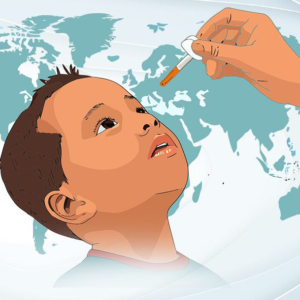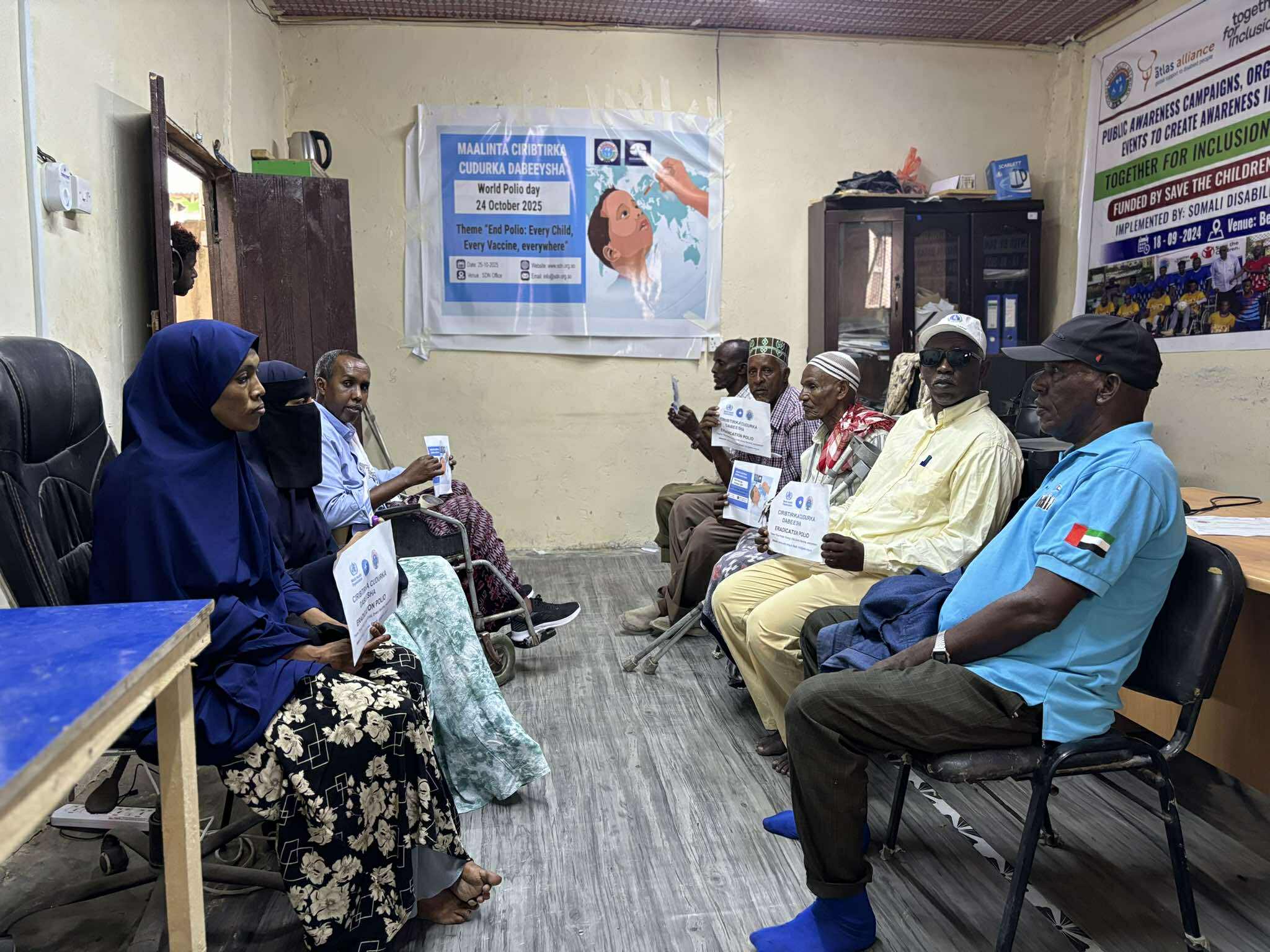
On 25 October 2025 Post Date Event is held in Mogadishu World Polio Day event held in Mogadishu by the Coalition of Somali Organizations of Persons with Disabilities (OPDs). The event aimed to raise awareness on polio prevention, recognize national progress in vaccination, and advocate for disability-inclusive health services. It brought together OPDs, civil society actors, health stakeholders, and humanitarian partners to reflect on achievements, remaining gaps, and the importance of community engagement in eliminating polio from Somalia.
Participants acknowledged the progress made by the Government of Somalia, with support from WHO and UNICEF, in vaccinating over 1.5 million children across the country. This milestone demonstrates continual improvement in public health delivery and disease surveillance. However, the discussions highlighted persistent challenges, including low awareness among caregivers, difficult access to remote populations, limited screening capacity, and late detection of suspected cases. Many children still develop permanent disabilities due to delayed intervention or missed vaccination doses.
The event emphasized that polio is not only a health issue but also a long-term social and disability concern affecting families, livelihoods, and community inclusion. Stakeholders called for stronger collaboration between government institutions, OPDs, CSOs, humanitarian actors, and international partners to ensure sustained vaccination efforts, early identification of cases, and inclusive rehabilitation support. A coordinated and community-centered approach remains essential to protect every child and ensure Somalia moves closer to full eradication of polio.
Objectives of the Event
- To raise awareness on polio prevention and vaccination among communities, caregivers, and disability organizations, emphasizing the importance of protecting every child from the disease.
- To highlight the progress made in Somalia’s polio eradication efforts, including national vaccination achievements and the role of health institutions and partners.
- To discuss the challenges faced by families and children affected by polio, including barriers to early detection, limited community knowledge, and the long-term impact of disability.
- To strengthen collaboration between OPDs, health actors, and government authorities in promoting inclusive public health messaging and improving access to screening and rehabilitation services.
- To mobilize advocacy for disability-inclusive health policies that ensure children with disabilities receive follow-up support and social protection after polio infection
Discussions and Participant Arguments
The participants held an open discussion on the current status of polio in Somalia, focusing on both the health and social dimensions of the disease. Several speakers noted that while vaccination coverage has improved in recent years, there are still communities with low awareness about prevention and early detection. It was highlighted that many parents only begin to suspect polio after physical disabilities become visible in their child, which means cases are often identified too late for proper intervention.
Challenges of Polio in Somalia
Despite strong efforts by the government and health partners, several challenges continue to affect the fight against polio in Somalia:
- Many parents and caregivers are not able to recognize early symptoms of polio, which delays screening and response.
- Some families confuse polio with other forms of disability such as cerebral palsy, causing late medical follow-up.
- Remote rural areas, nomadic populations, and IDP camps often have limited access to vaccination services.
- Ongoing instability disrupts vaccination campaigns and restricts health workers from reaching all children.
- Children affected by polio often face discrimination, leading to isolation and lack of rehabilitation support.
- After infection, many children do not receive physiotherapy, assistive devices, or continued care to improve mobility and inclusion.
Progress Achieved in Somalia
The challenges and progress in recent years made in Somalia
- 5 million children vaccinated through nationwide campaigns led by the Ministry of Health and supported by WHO and partners.
- Improved early detection capacity through expanded surveillance and the involvement of local health volunteers.
- Greater public health coordination between government institutions, international partners, and OPDs.
- Increased community outreach activities that educate parents on the importance of immunization and early reporting of suspected cases.
- Stronger national commitment to polio eradication as part of public health priorities, reflected in continued vaccination drives and emergency response planning.
Advantages of Polio Vaccination for Children Under Five in Somalia
- The vaccine prevents the child from contracting polio, which is the leading cause of permanent paralysis among young children.
- Vaccination builds community (herd) immunity, reducing the spread of the virus and protecting even children who are harder to reach.
- Vaccinating a child is far cheaper and easier than providing long-term treatment, rehabilitation, or assistive devices after disability occurs.
- Immunized children are more likely to grow without mobility restrictions, improving their chances for education, play, and social participation.
- Prevention saves parents from emotional stress, financial strain, and caregiving responsibilities that come with a disabled child.
Disadvantages and the Barriers in the Somali Context
- Some families do not understand the importance of vaccination or fear it due to rumors and low health education.
- In remote or conflict-affected areas, children sometimes miss scheduled doses, reducing effectiveness and leaving partial protection
- Insecurity, poor transportation, and nomadic lifestyle make it difficult for health workers to reach every household.
- A many parents reject the vaccine due to traditional beliefs or misunderstanding of its purpose, delaying eradication efforts.
- Many caregivers are unaware that multiple doses are required; missing follow-up doses leaves children vulnerable.
Case Studies of Polio Victim Persons.
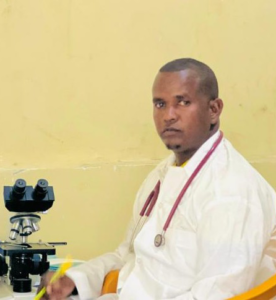
Mr. Ismail Elmi Mohamoud
A survivor of polio, is a professional laboratory science graduate
Case 1. Mr. Ismail Elmi Mohamoud
A survivor of polio, is a professional laboratory science graduate who has built an inspiring career despite his physical challenges. He currently operates his own private laboratory and pharmacy business, where he serves his community with dedication and professionalism. In addition to his private work, he is also employed by the Federal Government of Somalia’s Ministry of Health, contributing his technical expertise to the improvement of public health services.
As a passionate advocate for disability inclusion and health awareness, Mr. Ismail founded the Karama Disability Organization, which focuses on community mobilization and advocacy for polio prevention. Through this organization, he supports parents in accessing prevention services for their children and promotes treatment programs for polio-affected children above the age of five. His work has made a meaningful impact in raising awareness about polio, empowering persons with disabilities, and advancing the broader goal of eradicating the disease in Somalia.
Case 2. Mrs. Halawi Sheikh Dahir,
A resilient woman and survivor of polio, is a mother and dedicated entrepreneur who runs her own private shop business. Despite the challenges she has faced due to her disability, she has become a strong community activist, particularly advocating for the rights and empowerment of women and young girls with disabilities. She is the founder of the Banadir Disability Women Organization, a platform that promotes inclusion, equal opportunities, and access to essential services for women with disabilities in Somalia. Through her leadership, she has become a voice of hope and strength for many women who face similar struggles.
In addition to her entrepreneurship and advocacy work, Mrs. Halawi is an active member of the Disability Inclusion Works Lead in Somalia and the Coalition for Disability Inclusion, where she contributes to national efforts to advance the rights of persons with disabilities. She plays a vital role in mobilizing families and communities to prevent polio infections by raising awareness about the dangers of the poliovirus, which attacks the nervous system and causes irreversible paralysis and lifelong disability. Her commitment to promoting prevention, inclusion, and empowerment has made her a respected leader and role model in Somalia’s disability movement.
Case 4. Mr. Liban Mohamed Sharif,
a survivor of polio, is a professional Information Technology graduate who has turned his challenges into opportunities for growth and empowerment. He currently works as a skilled graphic designer for one of the leading private businesses in Mogadishu, where his creativity and technical expertise have earned him recognition and respect. His journey reflects determination, resilience, and a strong commitment to proving that disability does not limit one’s ability to achieve professional success.
In addition to his professional career, Mr. Liban is a founding member of the Somali Disability Youth Organization (SODYA), which focuses on empowering youth and teenagers with disabilities. Through SODYA, he helps organize training programs in modern technology, digital marketing, and creative design—skills that enable young persons with disabilities to find decent employment and live more independent lives. His work continues to inspire many PWDs across Somalia, promoting inclusion, self-reliance, and the belief that every individual, regardless of disability, can contribute meaningfully to society.
Call to Action
- To the Government of Somalia
Take urgent steps to strengthen nationwide immunization coverage by increasing outreach in remote and hard-to-reach areas. Allocate resources for disability-inclusive health services and ensure that every child, especially those at risk, receives full and timely vaccination.
- To Civil Society Organizations (CSOs)
Intensify grassroots awareness and community mobilization to dispel misinformation and encourage parents to vaccinate their children. CSOs must work closely with communities to support identification of unvaccinated children and ensure referral to health services.
- To Organizations of Persons with Disabilities (OPDs)
Continue amplifying the voices of polio survivors and families affected by disability. Lead advocacy efforts for inclusive policies and support awareness campaigns using lived experience to build community trust and understanding.
- To Humanitarian Actors
Integrate polio awareness and vaccination messaging into existing humanitarian response activities, particularly in IDP camps and displacement settings. Support health accessibility for vulnerable families and ensure no child is left behind due to conflict or poverty.
- To WHO and UNICEF Somalia
Sustain technical support, vaccination supplies, and capacity-building for community health workers. Strengthen rehabilitation pathways and follow-up support for children already living with polio-related disabilities, ensuring holistic care beyond vaccination.