
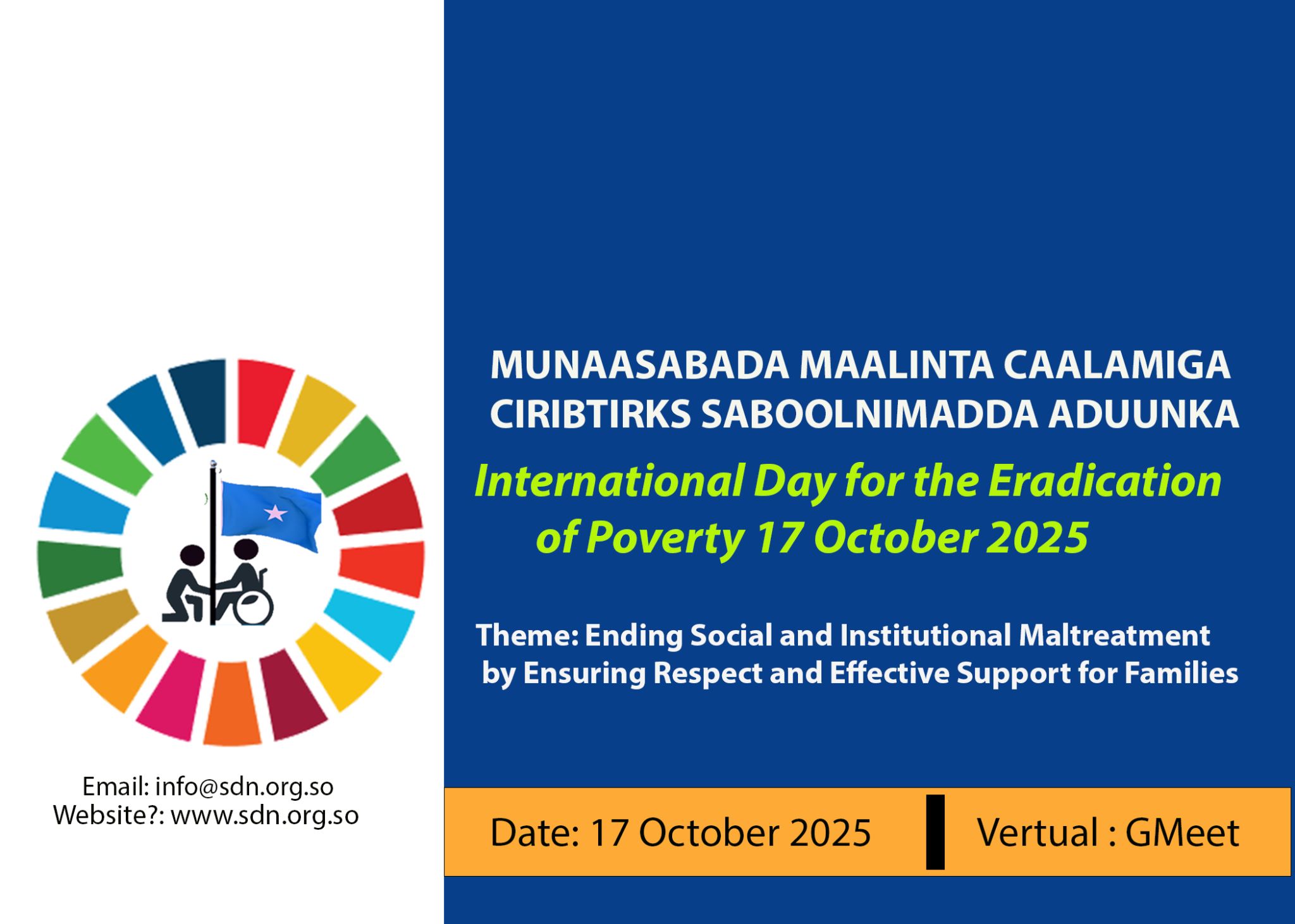
On October 17, 2025, several Somali civil society organizations came together to commemorate the International Day for the Eradication of Poverty. The event highlighted alarming global poverty trends, including the fact that nearly 700 million people worldwide continue to live in extreme poverty on less than two dollars a day, and nearly half of the global population survives on less than six dollars a day. Somalia, affected by more than 35 years of conflict, recurring droughts, and natural disasters, remains one of the countries most impacted by poverty. With over 3.5 million internally displaced persons and around 19 million people in need of humanitarian assistance, the struggle against poverty continues to be a national priority. Globally, poverty now affects an estimated 1.1 billion people, representing a significant share of humanity.
Objectives of the Event
The event aimed to raise awareness on the scale and impact of poverty, both globally and within Somalia, and to strengthen solidarity among stakeholders committed to poverty eradication. Key objectives included:
- Highlighting the challenges faced by internally displaced persons (IDPs), people with disabilities, women, and children groups at heightened risk of hunger, disease, and homelessness.
- Promoting dialogue on sustainable strategies for poverty reduction, humanitarian response, and long-term development.
- Strengthening collaboration among civil society organizations, government actors, and international partners to ensure no community is left behind.
- Reaffirming commitment to social justice, equality, and the protection of vulnerable communities.
Discussion Summary
During the event, participants discussed the deep-rooted nature of poverty in Somali communities, particularly its impact on IDPs and persons with disabilities. Many highlighted how limited access to healthcare, education, employment opportunities, and basic services continues to worsen inequality. Women and children were identified as disproportionately affected, with many lacking safety, nutrition, and pathways to economic empowerment. More than 15 organizations—including human rights groups, journalism associations, humanitarian aid agencies, youth networks, and organizations of persons with disabilities and women contributed insights. The discussions collectively underscored that eradicating poverty requires united action, better resource mobilization, and inclusive policies that prioritize the most vulnerable.
The discussion highlighted the worsening situation of persons with disabilities (PWDs), many of whom have been severely affected by recent evictions from public land previously used for shelter. Several hundred individuals who relied on these government-owned spaces are now facing homelessness, insecurity, and a complete lack of adequate shelter. Participants also expressed concern over the growing humanitarian aid gap in the country, intensified by the reduction of support previously provided through USAID, which had assisted thousands of vulnerable and displaced people. These developments have deepened the vulnerability of PWDs and underscored the urgent need for coordinated humanitarian and policy responses.
Call to Action
The participating organizations called for renewed commitment and immediate action to tackle the root causes of poverty in Somalia. They urged government institutions, donors, and the international community to increase support for sustainable livelihood programs, expand social protection systems, and invest in accessible essential services. Civil society organizations stressed the need for stronger partnerships across sectors to promote justice, inclusion, and resilience. The event concluded with a collective appeal for unity, collaboration, and continued advocacy to ensure that the fight against poverty remains at the forefront of Somalia’s development agenda
Call to Action
- Strengthen government commitment to poverty reduction through inclusive policies that prioritize vulnerable communities, especially IDPs, persons with disabilities, women, and children.
- Increase funding and support from donors and international partners for sustainable livelihood programs and long-term development initiatives.
- Expand social protection systems, including cash assistance, healthcare access, education support, and disability-inclusive services.
- Improve humanitarian response mechanisms to ensure rapid, coordinated, and equitable support for people affected by conflict and natural disasters.
- Promote economic empowerment through job creation, skills development, and entrepreneurship opportunities for youth, women, and persons with disabilities.
- Strengthen collaboration among civil society organizations, government entities, and humanitarian agencies to ensure unified action against poverty.
- Ensure accessibility and inclusion in all development and humanitarian programs so that persons with disabilities are not left behind.
- Increase public awareness and advocacy to challenge stigma, promote social justice, and encourage community participation in poverty eradication efforts.
- Enhance data collection and research to better understand poverty trends and guide evidence-based policymaking.
- Commit to long-term investment in peacebuilding, climate resilience, and community development to break the cycle of poverty.
