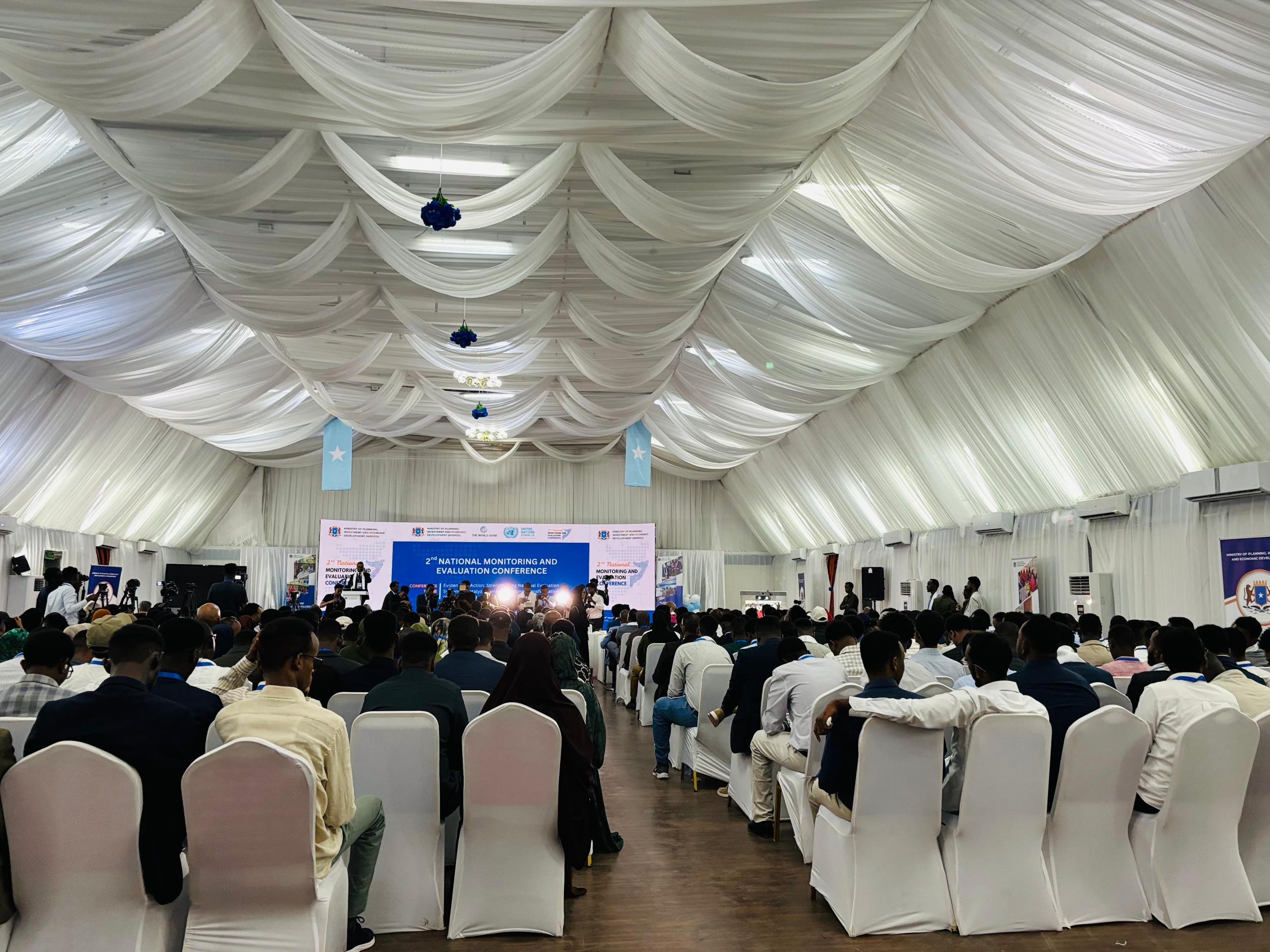
The Federal Government of Somalia, through the Ministry of Planning, Investment and Economic Development (MoPIED), organized the Second National Monitoring and Evaluation (M&E) Conference in Mogadishu. The event brought together a broad range of participants, including senior government leaders, representatives from Federal Member States, development partners, the United Nations, civil society, the private sector, universities, youth, women, and disability groups, as well as international and national experts in monitoring and evaluation. The conference highlighted the Ministry’s ongoing efforts to strengthen evidence-based decision-making and align national development priorities with the National Transformation Plan (NTP 2025–2029).
The Monitoring and Evaluation Department, established in 2016, consists of five sections: Results-Based Monitoring, Results-Based Evaluation, Management Information Systems (MIS), SDG and Capacity Development, and Research and Development. The event also marked the second anniversary of the Somali Monitoring and Evaluation Society (SMES), which is preparing for its first leadership election to represent Somalia in regional and global evaluation forums. The Director General of the Ministry, Mr. Mohamed Shire, presented the work of SMES and emphasized the importance of building strong national M&E systems to support both public and private sector institutions.
H.E. Mr. Osman Mo’alim Shatah, Chairperson of SONSA, thanked MoPIED, government offices, partners, and civil society for their cooperation. He emphasized the importance of strengthening Monitoring and Evaluation (M&E), especially at the district level where needs are greatest and government reach is limited. He noted that planning should come from the grassroots, and civil society plays a key role in connecting communities, government, and donors. Strengthened coordination and regular meetings will help identify challenges and improve accountability and program quality.
In his keynote remarks, the Minister of Planning, H.E. Mahamud Abdirahman Beneben, underscored the Ministry’s commitment to developing a national M&E curriculum and guidelines, supported by highly skilled experts. He explained that the new framework will standardize monitoring and evaluation practices across institutions and ensure realistic, timely, and result-oriented assessments. The Minister of Education, H.E. Farah Abdullkadir, expressed his appreciation for MoPIED’s efforts and highlighted the importance of M&E in the education sector from school enrollment and teaching quality to examinations, university performance, and labor market outcomes.
The Permanent Secretary of the Office of the Prime Minister, Mr. Kamal Gutale, emphasized that monitoring and evaluation is an essential pillar for implementing the National Transformation Plan. He noted that strong M&E strengthens accountability and improves government service delivery. The Deputy Prime Minister, H.E. Salah Ahmed Jama, officially opened the conference, commending participants and noting that the country is making steady progress in governance and institutional reform. He emphasized that commitment and accountability are key tools for any nation seeking sustainable development.
International partners also shared their perspectives. Dr. Christopher Pycroft, Development Director at the British Embassy in Mogadishu and Deputy Chair of the Somalia Donor Group, praised the initiative and emphasized that global development success is rooted in coordination, follow-up, and robust evaluation. He described Somalia’s efforts as essential steps toward improved governance and long-term national development.
The conference featured two major panel discussions that provided deeper analysis of Somalia’s current M&E landscape, the role of SMES, and the country’s readiness to join the African Evaluation Association and other regional networks. Panelists from government institutions, UN agencies, and academia reflected on the potential of a strong national M&E system to improve program implementation, enhance oversight, and shape the country’s development trajectory. Participants raised questions on the structure, sustainability, and future financing of SMES, asking whether the system would be nationally led or donor-supported, and how its independence would be maintained.
The event also included the recognition of technical experts who contributed to establishing Somalia’s national M&E framework, policy, and strategic direction. Their work was acknowledged as foundational to building a professional and functional M&E ecosystem across the country. In the closing session, the Director General of MoPIED, Mr. Mohamed Shire, summarized the expected outcomes of the conference and reaffirmed the Ministry’s dedication to strengthening transparent, effective, and evidence-driven monitoring and evaluation practices nationwide.
The Director General of the Ministry of Planning, Investment and Economic Development, Mr. Mohamed Shire, delivered the closing remarks, summarizing the key takeaways and highlighting expected outcomes from the second National M&E Conference. He thanked all participants and emphasized the Ministry’s commitment to advancing a strong, transparent, and evidence-driven M&E framework for Somalia’s future.
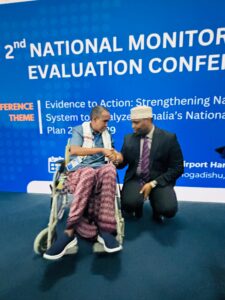
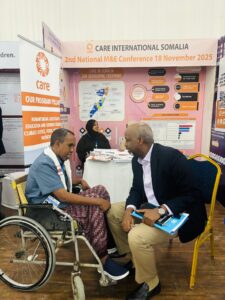
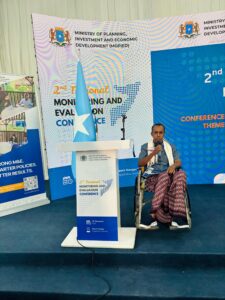
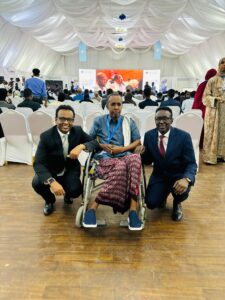
Mr. Abdullahi Hassan chairperson of SDN Somali Disability Network participated in the conference and held a side meeting with the Director General of the Ministry of Planning, Mr. Mohamed Shire; the Permanent Secretary of the Office of the Prime Minister, Mr. Kamal Gutale; the Chairperson of SONSA (Somalia Non-State Actors), Mr. Osman Maolim; and the Minister of Planning, H.E. Mohamud Abdirahman. The discussion focused on key thematic areas of disability inclusion that need to be implemented, as well as aligning government offices and organizational policies and strategies with disability inclusion, the National Disability Act, and the CRPD. and Use Washington G Question for inclusive Data Demographics