
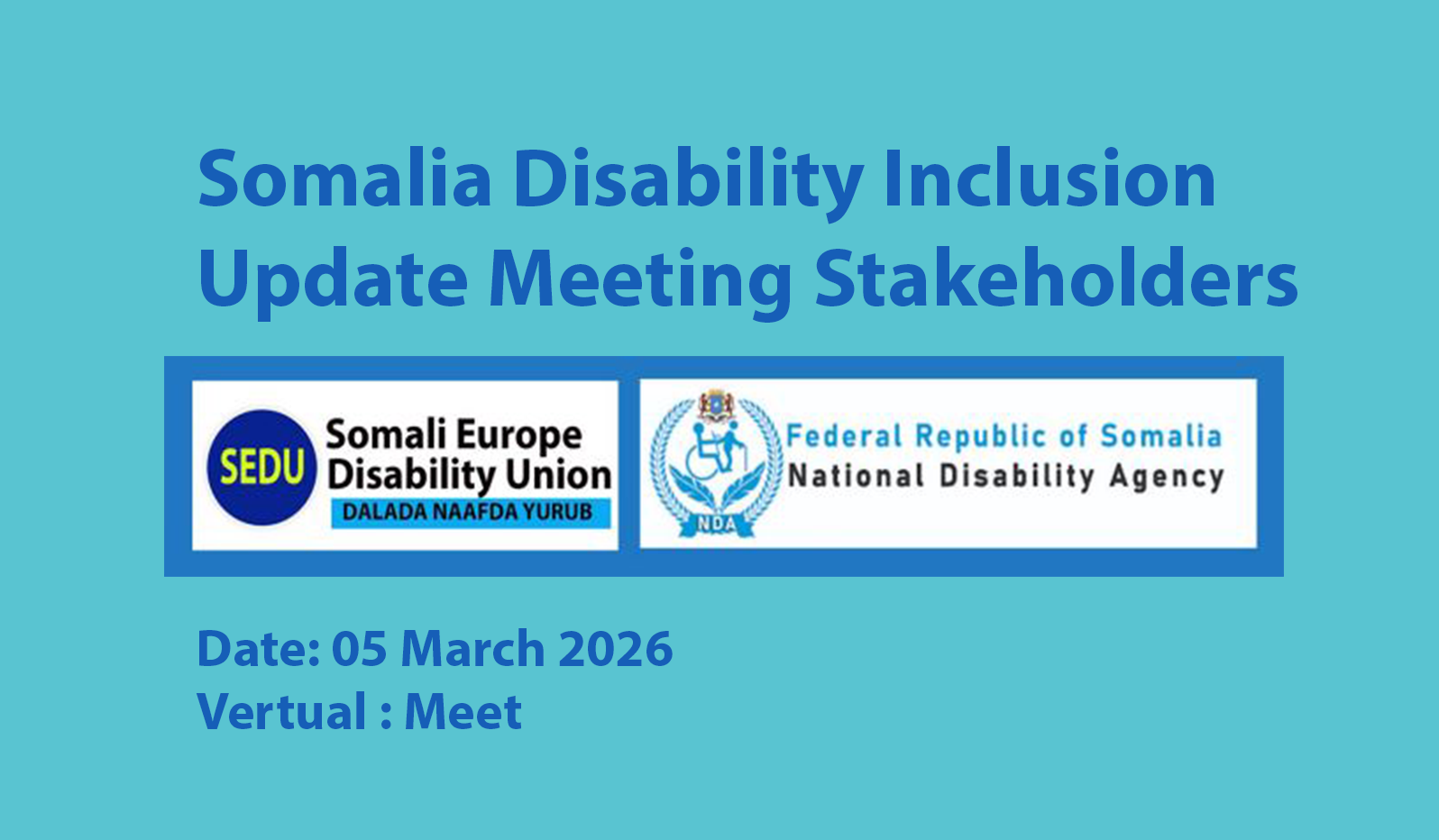
On 05 March 2026, as part of activities marking International Disability Awareness Month, a virtual Disability Inclusion Consultation Meeting was organized by the SEDU – Somalia European Disability Union Coalition based in Sweden. The meeting aimed to strengthen collaboration among organizations working on disability inclusion in Somalia and to discuss ways to improve coordination in humanitarian, development, and rehabilitation programs.
The meeting brought together representatives from several institutions including Humanity & Inclusion (HI) Mogadishu Office, Somali Disability Network (SDN), Somali Assistive Technology Institute (SATI), Somalia Disability Youth Association (SODYA), and the National Disability Agency Somalia (NDA), which chaired the meeting. Each organization briefly presented its role and ongoing efforts to promote disability inclusion in Somalia.
During the discussion, Ms. Juliet Muzundo from Humanity & Inclusion highlighted key initiatives including the Somalia Disability Inclusion Technical Task Force (SDITT) and progress under the Leave No One Behind (LNOB) Phase III program, as well as planned activities under LNOB Phase IV. She emphasized the importance of strengthening technical coordination to ensure that disability inclusion is integrated across humanitarian and development programs.
Mr. Abas Shire from SEDU – Somalia European Disability Union Coalition emphasized the need for stronger national and international collaboration to ensure disability inclusion in disaster response and emergency humanitarian work. He stressed that coordinated action among stakeholders is essential to ensure that persons with disabilities are not left behind during crises.
Mr. Liban from Somali Assistive Technology Institute highlighted the importance of expanding inclusive rehabilitation services for all types of disabilities. He particularly noted the need to support persons who are blind through assistive technologies, including the provision of white canes and Braille learning support.
Mr. Abdullahi Hassan from Somali Disability Network stressed the importance of creating a joint platform that brings together Organizations of Persons with Disabilities (OPDs), government institutions, and international donors. Such a platform would strengthen coordination, advocacy, and information sharing to advance disability inclusion across sectors.
The Chair of the meeting, Mr. Mohamed Abdull Jam from the National Disability Agency Somalia, emphasized the importance of strengthening inclusive humanitarian action and engaging national and international coordination platforms, including the United Nations Country Team, European Union embassies, and international NGOs. He also highlighted the need to organize roundtable discussions, establish disability data collection surveys, and collaborate with international universities to strengthen research and evidence-based programming.
Participants also discussed key thematic areas including rehabilitation services, Technical and Vocational Education and Training (TVET) opportunities for persons with disabilities, and strengthening disability inclusion within humanitarian aid programs. The discussion emphasized the importance of ensuring that persons with disabilities are included in emergency responses and development initiatives.
The meeting concluded with several proposed joint actions, including the establishment of a joint disability inclusion coordination platform, improved sharing of drought-related updates and information affecting persons with disabilities, and stronger coordination of emergency humanitarian assistance. Participants also agreed on the importance of mobilizing support for the estimated 16% of persons with disabilities in Somalia and monitoring the implementation of commitments made during the Global Disability Summit 2025, including the Berlin and Oman commitments.
