
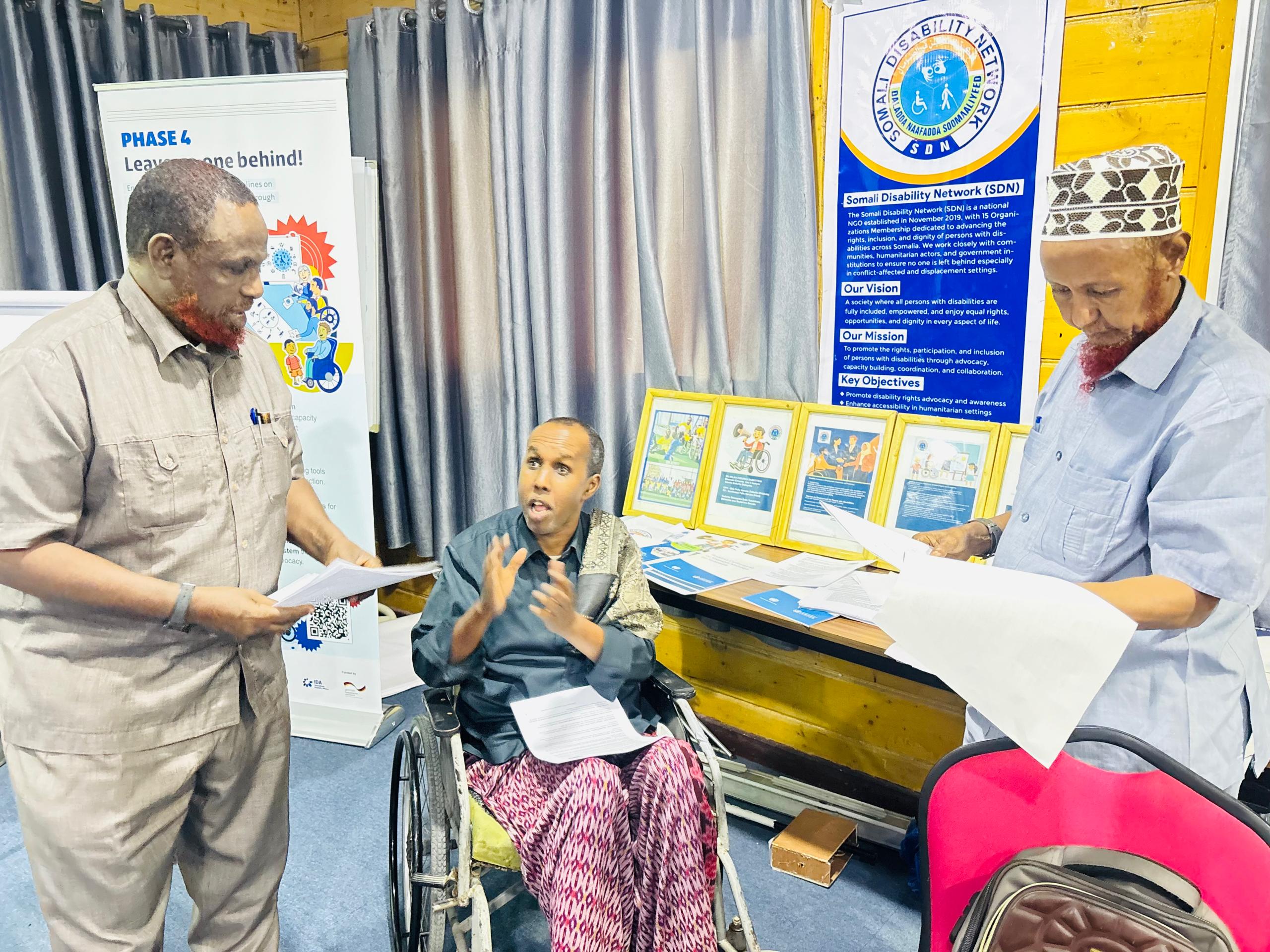
In Mogadishu On 22–23 July at the Peace Hotel, brought together representatives of Organizations of Persons with Disabilities (OPDs) from across Somalia to strengthen coordination, promote knowledge exchange, and enhance collaboration within the disability movement. Organized by HI through LNOB program.
Day One focused on organizational learning and dialogue. Participating OPDs delivered presentations highlighting their mandates, achievements, ongoing programs, and key challenges. A panel discussion followed, examining the current state of disability coordination across Somalia and identifying opportunities to strengthen cooperation among OPDs. Participants also reflected on the learning and exchange visits to Uganda and Cameroon, sharing experiences, good practices, and lessons that could be adapted to improve disability inclusion, organizational development, and advocacy in Somalia.
Some of the ODPs raised concern for the SOSODIN Somalia and Somaliland Disability Network which previously served as a regional coordination platform, is no longer active. It was reported that the network has ceased operations and its membership structure is no longer functional. That there is illegal communication and cooperation made in the name of SOSODIN which is crime and illegal in Somalia.
Day Two began with a recap of the previous day’s discussions, followed by presentations from Humanity & Inclusion (HI) on disability inclusion in humanitarian and development programming. The African Disability Forum (ADF) presented its regional priorities, strategic initiatives, and opportunities for collaboration with Somali OPDs. Representatives of the Leave No One Behind (LNOB) partners also shared their approaches to advancing inclusive development and strengthening the participation of persons with disabilities.
During the group work sessions, participants discussed practical recommendations for strengthening the disability movement in Somalia. A strong consensus emerged that priority should be given to strengthening and expanding existing OPDs and coordination mechanisms rather than establishing new disability networks, in order to avoid fragmentation, build institutional capacity, and promote sustainable collaboration. Participants further emphasized the importance of deepening cooperation with the African Disability Forum (ADF) and Leave No One Behind (LNOB) partners through sustained capacity development, knowledge sharing, joint advocacy, and coordinated programming.
The workshop concluded with a shared commitment to fostering stronger partnerships, enhancing coordination among OPDs, and promoting a unified, representative, and rights-based disability movement that advances the inclusion and meaningful participation of persons with disabilities throughout Somalia.
