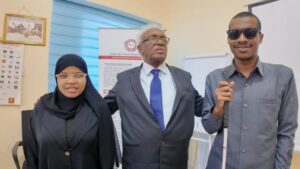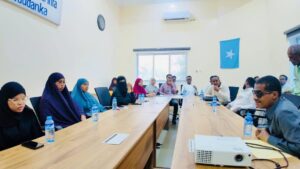
On 23 August 2026, a new Somali Sign Language Guide Book was officially launched in Mogadishu. The guide is designed to support communication between people who are deaf or hard of hearing and the wider community. It provides a useful reference for learning Somali Sign Language and improving communication with persons with hearing disabilities.
The book is not only intended for people with disabilities. It is also an important learning tool for parents, teachers, students, government officials, humanitarian workers, journalists, service providers, and members of the public who want to communicate more effectively with deaf people. Better understanding of sign language can help reduce communication barriers and improve access to education, public services, employment, health services, and social participation.
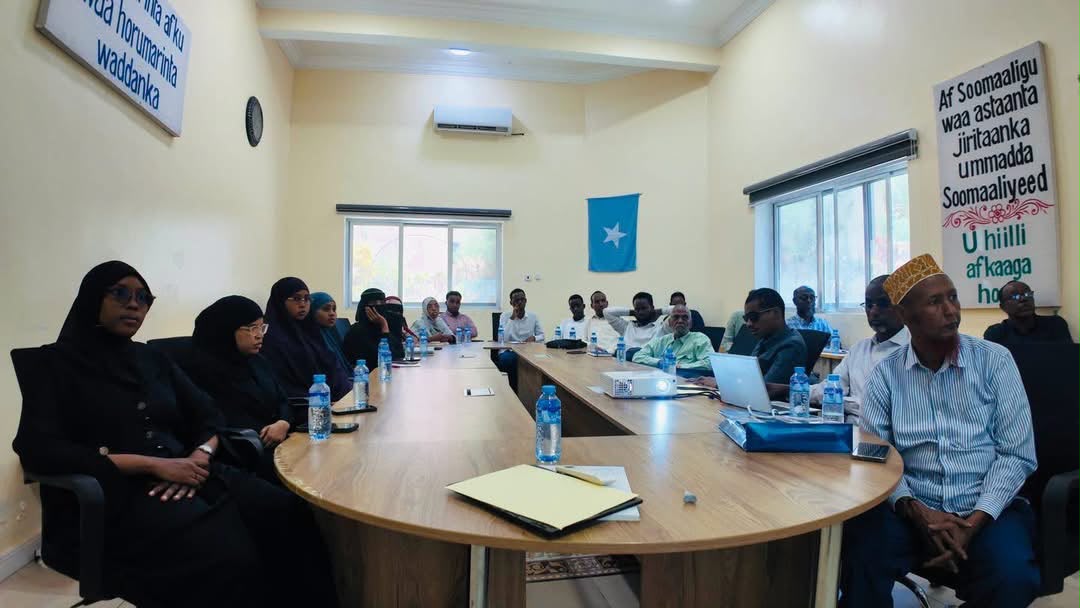
The launch event was held at the Regional Somali Language Academy (AGA), an institution that works to promote, develop, and preserve the Somali language. Holding the event at AGA highlighted the importance of making the Somali language accessible to all members of society, including persons with disabilities.
The event was organized by the Somalia Disability Journalists Association (SODJA), an organization established by journalists with disabilities. SODJA works to promote the rights, participation, visibility, and voices of persons with disabilities through journalism and public awareness.
The event brought together different stakeholders, including representatives from civil society organizations, Organizations of Persons with Disabilities (OPDs), the Banaadir Regional Administration and local government, as well as officials and representatives from AGA. Their participation demonstrated the importance of cooperation between government institutions, disability organizations, civil society, and language institutions.
Participants highlighted the need for greater awareness and wider use of Somali Sign Language in public institutions and community services. They also emphasized that communication should be accessible so that deaf and hard-of-hearing people can participate equally in society and have access to information and services.
The launch of the guide book represents an important step toward inclusive communication and disability inclusion in Somalia. It can help strengthen communication between deaf people and the wider community and encourage more people to learn Somali Sign Language.
The initiative also supports the principle of “Nothing About Us Without Us”, by promoting the participation and leadership of persons with disabilities in initiatives that directly affect their lives.
The participants called for a national inclusive communication policy to regulate communication systems across Somalia. They stressed that both public and private sectors should make communication accessible to everyone.
They also called for Braille and Somali Sign Language interpretation to be available in public services, meetings, education, media, and other important activities so that deaf and blind people can access information and participate equally in society. The participants emphasized that inclusive communication should become a national standard, ensuring that persons with disabilities are not excluded from information, services, and decision-making.
The Chairperson of SODJA Mr. Mohamed Hassan Shaciye also announced plans for future training in Braille and Somali Sign Language for students, professionals, parents, and other community members. These trainings will help improve two-way communication between persons with disabilities and the wider community.
He also announced plans to organize competitions in art and painting, poetry, lyrics, songs, and other cultural activities. These activities will create opportunities for persons with disabilities to showcase their talents, express themselves, and participate equally in cultural and community life.