
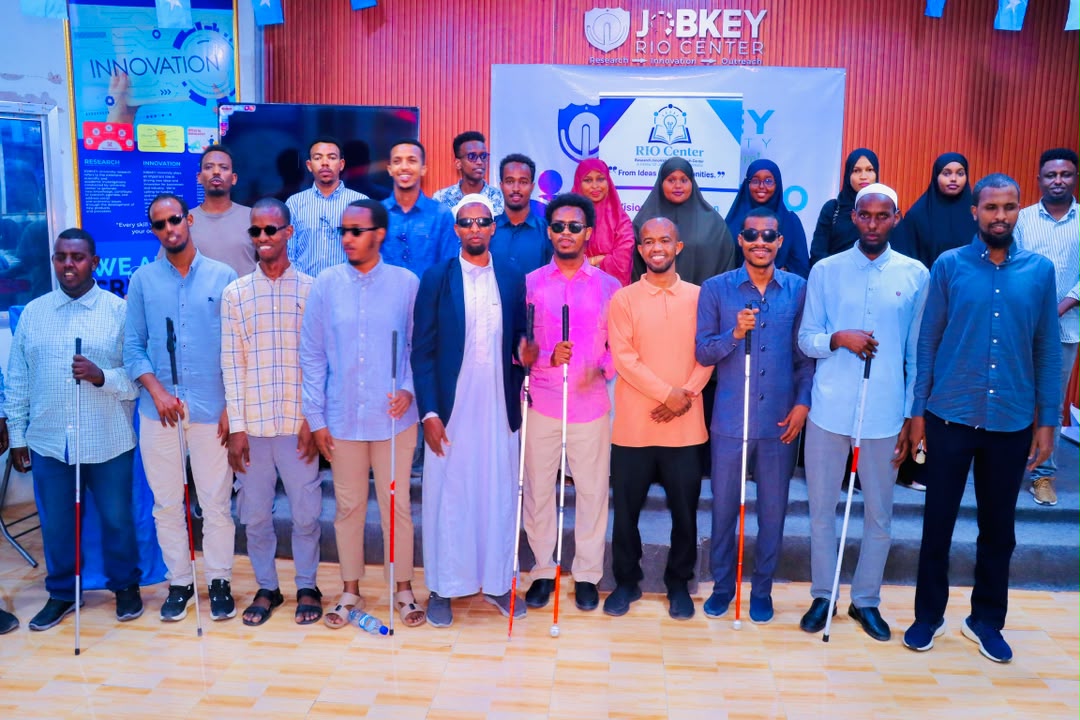
The Association of Visually Impaired Youth (UDHAN) organized an event in Mogadishu, Somalia, on 15 October 2026 to commemorate International White Cane Day. The event brought together more than 30 participants, including persons with disabilities, young people, students, civil society representatives, and members of the Banadir Regional Administration.
During the event, participants discussed the importance of the white cane for people with visual impairments, including its benefits in promoting safe mobility, independence, freedom, and self-reliance. They also discussed the challenges associated with accessing and using white canes and highlighted the urgent need to make assistive devices more readily available to people with visual impairments.
UDHAN presented its achievements, progress, and key activities over recent years, highlighting its efforts to promote the rights, education, and social inclusion of persons with visual impairments, particularly children and young people.
The organization works to raise awareness about the prevention of visual impairment and its causes, promote access to eye health services and appropriate treatment, and support students with visual impairments. Its work also focuses on improving access to essential assistive devices and educational resources, including white canes, Braille machines, Braille learning materials, and assistive technologies that enable people with visual impairments to read, learn, communicate, and participate more independently in society.
Despite these efforts, people with visual impairments in Somalia continue to face significant challenges, including limited access to eye health services, treatment, rehabilitation, inclusive education, and assistive technology. The lack of affordable and accessible white canes, Braille equipment, and screen-reading software creates additional barriers to education, mobility, employment, and independent living. These challenges affect people of all ages, particularly children, young people, students, and older persons with visual impairments.
At the conclusion of the event, participants issued a call to action to international donors, civil society organizations, the Federal Government of Somalia, and the Banadir Regional Administration, urging them to take concrete measures to address the needs and challenges of people with visual impairments. They called for increased financial and technical support, improved access to eye health services and treatment, and the provision and distribution of assistive devices, including white canes, Braille machines, Braille educational materials, and screen-reading software.
Participants also emphasized the importance of inclusive education, accessible public services, and equal opportunities for persons with visual impairments. They urged all stakeholders to work together to ensure that children, young people, and older persons with visual impairments can exercise their rights, access essential services, and participate fully in their communities.
The white cane is a powerful symbol of independence, safe mobility, freedom, and self-reliance. Through this commemoration, UDHAN reaffirmed its commitment to advocating for the rights and dignity of persons with visual impairments and called on all stakeholders to strengthen their efforts toward building an inclusive society in which everyone has equal opportunities.
